Bosnia: A Comprehensive Guide to its History, Culture, and Travel
A clear, engaging overview of Bosnia and its key highlights for travelers and readers curious about the country.
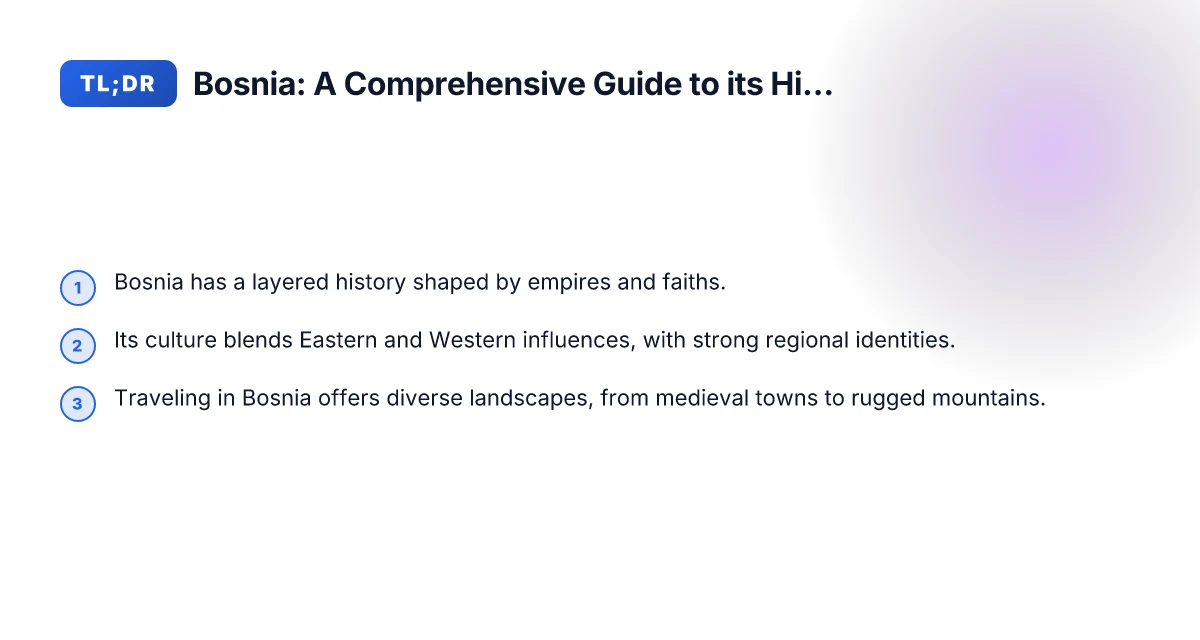
Bosnia is a country in Southeast Europe known for its complex history, vibrant culture, and striking landscapes. It sits at a crossroads of empires and religions, which is reflected in its architecture, food, music, and everyday life. Whether you’re tracing the steps of ancient civilizations or planning a modern trip, Bosnia offers a rich tapestry of experiences.

A brief history: from medieval kingdoms to modern nation
Bosnia and Herzegovina has a long and layered past. It emerged as a centralized Bosnian state in the Middle Ages, then became part of the Ottoman Empire for several centuries, which left a deep imprint on religion, cuisine, and daily life. In the 20th century, Bosnia faced upheaval during the World Wars and the Yugoslav era, culminating in the devastating conflict of the 1990s and the signing of the Dayton Agreement in 1995. Since then, the country has rebuilt and redefined itself as a diverse and multiethnic federation. Key dates and themes:
- Medieval statehood and the rise of Bosnian culture.
- Ottoman influence: mosques, bathhouses, and coffeehouses.
- Austro-Hungarian and Yugoslav periods that shaped infrastructure and industry.
- The 1990s war and the peace process that created the current political structure.
- Recent efforts toward reconciliation, modernization, and European integration.
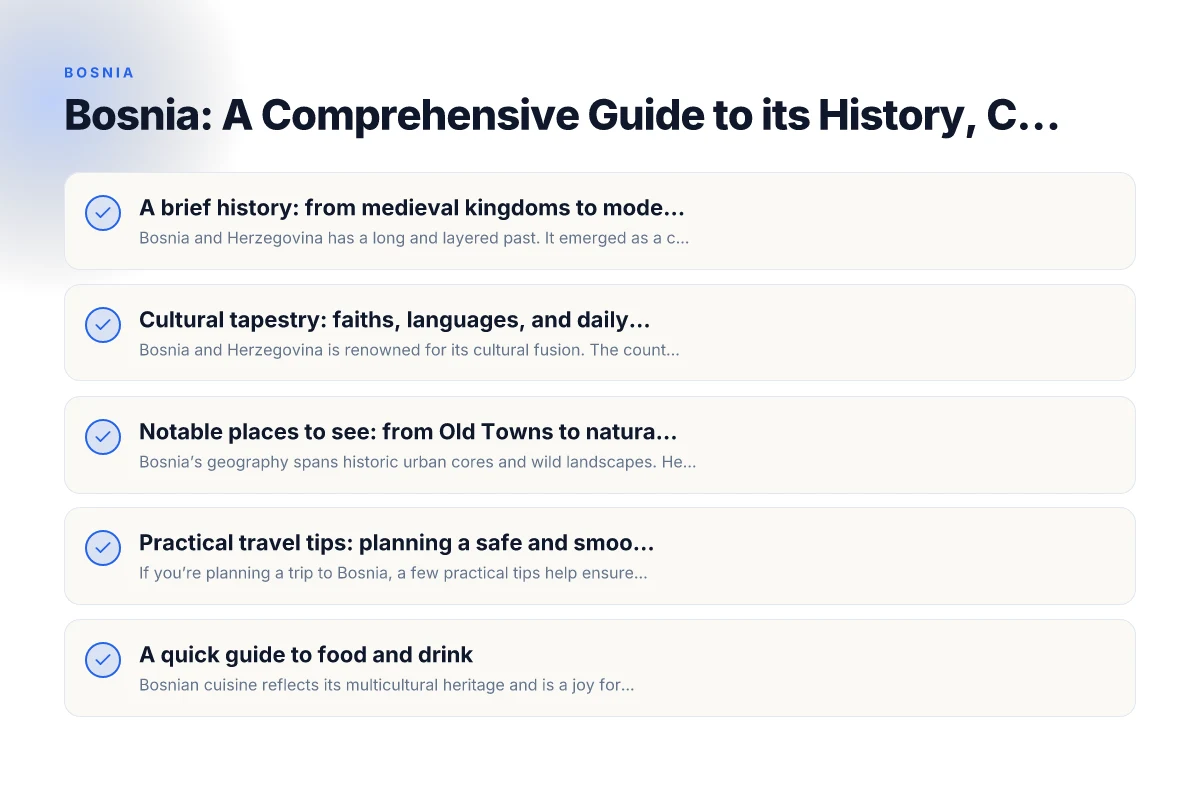
Cultural tapestry: faiths, languages, and daily life
Bosnia and Herzegovina is renowned for its cultural fusion. The country is home to three major constitutions of identity: Bosniaks, Croats, and Serbs, each with its own linguistic and religious traditions. This mix has produced a distinctive everyday culture:
- Religion: Islam, Catholicism, and Orthodox Christianity coexist, often within close proximity.
- Language: Bosnian, Croatian, and Serbian are mutually intelligible varieties of Serbo-Croatian, with regional nuances.
- Cuisine: A delicious blend of Ottoman-inspired dishes (like burek and cevapi) and Central European influences (like schnitzel and pastries). Coffee culture remains strong, especially the strong Bosnian coffee served with patience and ritual.
- Arts and music: Sevdalinka, sevdah songs, and folk traditions sit alongside modern pop, rock, and film. Sarajevo, Mostar, and Banja Luka are cultural hubs with museums, galleries, and music venues.
- Hospitality: Bosnians are known for warmth and welcome, often inviting guests to share conversations and coffee or meals.
Notable places to see: from Old Towns to natural wonders
Bosnia’s geography spans historic urban cores and wild landscapes. Here are some must-visit places:
- Sarajevo: The capital city, often called the “Jerusalem of Europe” for its religious diversity. Don’t miss Baščaršija, the old bazaar quarter, and the Latin Bridge. The city is also home to the Sarajevo Film Festival and a robust café scene.
- Mostar: Famous for the Stari Most (Old Bridge) that spans the Neretva River. The old town feels timeless, with stone streets and traditional houses.
- Blagaj and the Buna River Spring: A stunning natural site with a Dervish monastery perched near the turquoise spring.
- Kravice Falls: A scenic set of waterfalls near Ljubuški, ideal for day trips and photos.
- Sutjeska National Park: Home to Perućica forest and the dramatic Maglić mountain, offering hiking and history in one place.
- Travnik, Jajce, and other historic towns: Each offers castle ruins, mosques, fortresses, and a sense of regional character.
Practical travel tips: planning a safe and smooth trip
If you’re planning a trip to Bosnia, a few practical tips help ensure a smooth experience: Bolivia: A Complete Guide to Its Culture, Geography, and Travel
- Best time to visit: late spring (May–June) and early autumn (September–October) for mild weather and fewer crowds. Summer is busy along the coast and in popular towns.
- Getting around: Roads can be winding in the countryside, but there are good bus links between major cities. Renting a car is convenient for exploring rural areas.
- Safety and etiquette: Bosnia is generally safe for travelers. Be respectful of local customs, especially in more traditional towns. Dress modestly when visiting religious sites.
- Currency and costs: The official currency is the Bosnia and Herzegovina convertible mark (BAM). Prices are generally affordable, though tourism hotspots can be pricier.
- Language basics: English is widely spoken in urban areas and tourist spots. Learning a few phrases in Bosnian, Croatian, or Serbian can be appreciated by locals.
- Cultural etiquette: Hospitality is a cornerstone of Bosnian culture. If invited for tea or coffee, accepting and sitting for a while is customary.
A quick guide to food and drink
Bosnian cuisine reflects its multicultural heritage and is a joy for food lovers:
- Burek: A flaky pastry filled with meat, cheese, or spinach.
- Cevapi: Small grilled minced meat sausages served with flatbread and onions.
- Begova čorba: A hearty Bosnian soup traditionally made with chicken, vegetables, and herbs.
- Pita and pita shops: Various stuffed pastries made fresh daily.
- Bosnian coffee: A strong, ritual-rich coffee served with a sweet treat. Guests are often offered a glass of water to cleanse the palate.
- Desserts: Tufahija (walnut-stuffed apples) and baklava are popular choices.
Economic and political snapshot
Bosnia and Herzegovina operates as a federal parliamentary republic with a tripartite presidency representing the three major ethnic groups. Its political structure can be complex, with entities and cantons shaping administration and governance. The country’s economy blends manufacturing, agriculture, and services, with growing attention to tourism, IT, and light industry. Post-war reconstruction and international cooperation have supported infrastructure improvements, though regional disparities remain. The country aims for further European Union integration, which guides reforms in rule of law, business climate, and public administration.
How to savor Bosnia like a local
To really feel the country, mix classic sightseeing with intimate experiences:
- Walk the old towns: Wander the narrow lanes of Mostar’s old bazaar and Sarajevo’s Baščaršija to feel the living history.
- Sip coffee slow: Join locals for Bosnian coffee. Watch the ritual, savor the aromas, and soak in conversations.
- Explore nature: Take a day trip to the Buna spring or Kravice Falls, or hike in Sutjeska National Park for breathtaking scenery.
- Meet people: Visit a local market, a cafe, or a family-run restaurant. Ask about regional specialties to discover the country’s culinary diversity.
A concise comparison: Bosnia and Herzegovina vs. nearby destinations
| Aspect | Bosnia and Herzegovina | Croatia | Serbia | Montenegro |
|---|---|---|---|---|
| Landscape | Mountains, rivers, medieval towns | Coastline, islands, Adriatic | Plains, hills, historic cities | Coastal mountains, fjords-like scenery |
| Culture | Multifaith, Ottoman and Austro-Hungarian heritage | Mediterranean influences, coast-focused | Orthodox and Central European influences | Adriatic culture with Balkan traditions |
| Language | Bosnian/Croatian/Serbian variations | Croatian, Serbian, Bosnian largely mutually intelligible | Serbian | Montenegrin, Serbian, Albanian minorities |
| Travel style | Rich history with strong cafés and bazaars | Sun-drenched coast and islands | City breaks and rugged landscapes | Scenic drives and nature reserves |
| Best for | History lovers and nature seekers | Coastal lovers and island travelers | Urban explorers and culture buffs | Outdoor adventures and scenic routes |
When to go and how to plan a tri-state route
If you’re considering a broader Balkans itinerary, Bosnia pairs well with neighboring countries. A common route starts in Sarajevo, moves to Mostar, and then continues to nearby Croatia or Montenegro. For a longer trip, consider extending to Belgrade in Serbia or Tirana in Albania. Plan at least 5 to 7 days to savor cities and landscapes without rushing. Bermuda: A Complete Guide to the Island, Culture, and Travel
Final recommendations
- Start in Sarajevo to sense the country’s layered identity. The city’s museums, old town, and mountain backdrop offer a strong introduction to Bosnia.
- Include Mostar for the iconic Old Bridge and a sense of the region’s bridging history, between cultures and centuries.
- Add a nature day in Sutjeska or near Kravice Falls to experience Bosnia’s outdoor beauty beyond cities.
- Try a slow-food day: sample burek, cevapi, and Bosnian coffee for a culinary grounding in local traditions.
- Respect the cultural mosaic: approach with curiosity and openness to learn about the country’s diverse identities and peaceful coexistence.
If you’re seeking a destination with a powerful sense of place, Bosnia and Herzegovina delivers a memorable blend of history, hospitality, and landscapes. It rewards curious travelers who take the time to explore beyond the obvious landmarks, diving into streets, markets, and communities where the country’s past and present meet in everyday life.
Naomi writes about VPN apps, browsers and privacy settings.