Cyprus: A Complete Guide to its Landscape, Culture, and Travel Tips

Explore Cyprus, from beaches and history to culture, food, and travel tips in one comprehensive guide.
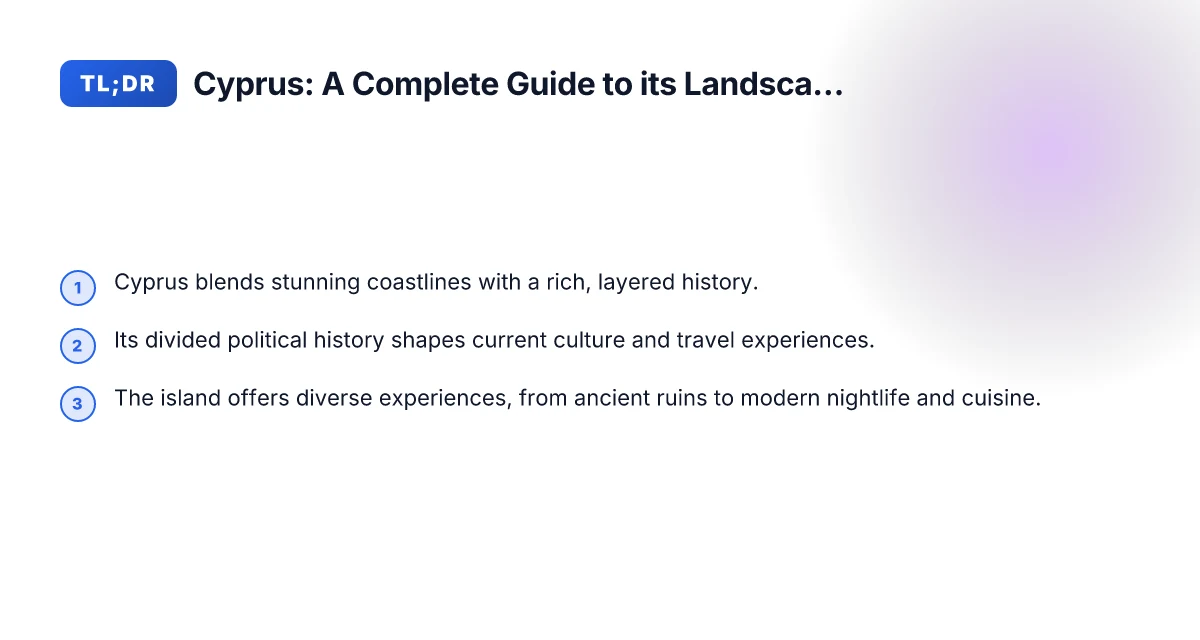
Cyprus is a sun-soaked island that sits at the crossroads of Europe, Asia, and Africa. It is famous for its crystal-clear waters, ancient ruins, and a culture shaped by Greek, Turkish, and Levantine influences. Whether you’re drawn by sunbathing on golden beaches, wandering through archaeological sites, or tasting a diverse menu of regional dishes, Cyprus offers a vivid mix of experiences for every traveler.

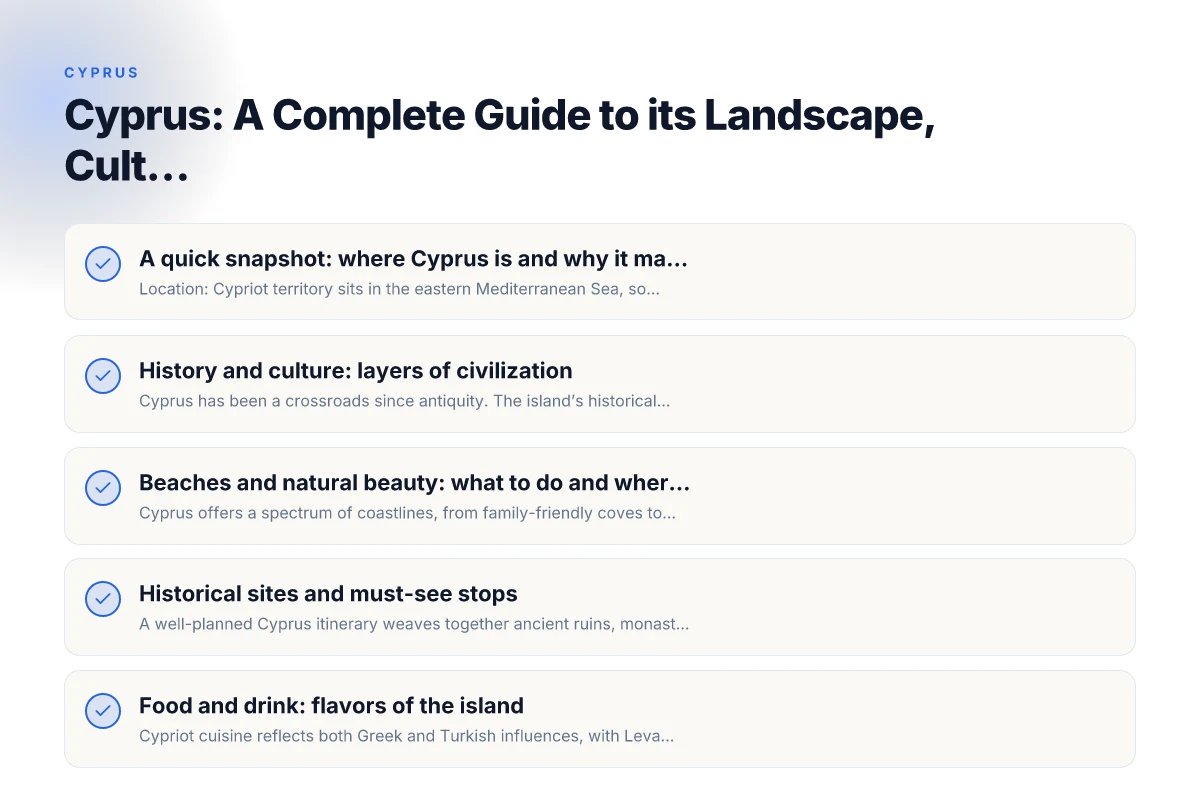
A quick snapshot: where Cyprus is and why it matters
- Location: Cypriot territory sits in the eastern Mediterranean Sea, south of Turkey and west of Syria.
- Political note: The island has a longstanding division, with the Republic of Cyprus in the south and the Turkish Republic of Northern Cyprus recognized only by Turkey. The buffer zone, known as the Green Line, runs through Nicosia, making the capital the last divided capital in the world.
- Climate: Mediterranean, with hot dry summers (June–August) and mild winters (December–February). Spring and autumn are ideal for shoulder-season travel.
- What to expect: A mix of pristine beaches, rugged mountains, ancient ruins, charming villages, and vibrant city life in Nicosia, Limassol, and Larnaca.
History and culture: layers of civilization
Cyprus has been a crossroads since antiquity. The island’s historical timeline is visible in its ruins, museums, and even in contemporary life.
- Ancient roots: Kourion, Salamis, Paphos Archaeological Park, and Tombs of the Kings reveal Hellenistic and Roman eras.
- Medieval and later influences: Byzantine, Lusignan, and Ottoman periods shaped architecture and customs.
- Modern culture: Greek Cypriot and Turkish Cypriot communities maintain distinct traditions, while daily life in both communities often shares Mediterranean warmth and hospitality.
- Language note: Greek is widely spoken in the south; Turkish is common in the north. English is widely used for business and tourism.
Beaches and natural beauty: what to do and where to go
Cyprus offers a spectrum of coastlines, from family-friendly coves to dramatic, wind-swept bays.
- Popular beaches: Nissi Beach (Ayia Napa) for nightlife and water sports; Fig Tree Bay ( Protaras) for calm waters; Makronissos and Latsi for quieter days.
- West vs. east coast vibes: The west (Paphos area) tends to be calmer with scenic sea caves. The east (Ayia Napa/Protaras) is famous for lively beaches and nightlife.
- Inland scenery: The Troodos Mountains provide hiking in summer and snow sports in winter, with traditional mountain villages and monasteries.
- Eco and nature: Akamas Peninsula and Lara Bay offer rugged landscapes, sea turtle nursuries, and rugged coastal trails.
Historical sites and must-see stops
A well-planned Cyprus itinerary weaves together ancient ruins, monasteries, and fortified towns.
- Paphos: Home to the UNESCO-listed Kato Paphos Archaeological Park, Roman villas, and the Tombs of the Kings.
- Kourion: An impressive Greco-Roman city with cliffside views and well-preserved amphitheaters.
- Salamis ruins: A vast ancient site near Famagusta that offers a glimpse into early Cypriot city life.
- Kykkos Monastery: A symbol of Cypriot religious heritage nestled in the Troodos foothills.
- Nicosia: The divided capital with the Shacolas Tower, the Ledra Street crossing, and several museums.
Food and drink: flavors of the island
Cypriot cuisine reflects both Greek and Turkish influences, with Levantine touches. Expect fresh ingredients and aromatic herbs. Croatia: A Complete Guide to its Beauty, Culture, and Travel Highlights
- Meze: A long, shared tasting menu featuring grilled meats, halloumi, tzatziki, and salads. A great way to sample multiple dishes.
- Halloumi: The iconic Cypriot cheese, often grilled or fried as part of meze.
- Fresh seafood: Grilled octopus, sea bass, and calamari are common coastal dishes.
- Meats and grills: Souvlaki, sheftalia (spiced pork or lamb sausage), and kleftiko (slow-cooked lamb).
- Desserts: Loukoumades (honey-drowned doughnuts), baklava, and galaktoboureko.
- Drink: Commandaria wine, a sweet dessert wine with ancient origins. Local beer and ouzo-like liqueurs are popular too.
Getting around and practical travel tips
Navigating Cyprus is straightforward, with options that suit different travel styles.
- Transportation: Renting a car is common for exploring rural areas and beaches at your own pace. Public buses connect major towns but may be slower or less frequent.
- Driving: Right-hand drive. Traffic is generally relaxed outside big cities. Off-season driving in the Troodos region can be rewarding for scenery.
- Best time to visit: May–June and September–October offer great weather with fewer crowds and reasonable prices.
- Money: The currency is the Euro. ATMs are widely available, and credit cards are accepted in many places, but smaller villages and remote areas may prefer cash.
- Safety: Cyprus is considered very safe for travelers, with standard precautions for crowds and valuables advisable in tourist hotspots.
A practical 7-day sample itinerary
- Day 1–2: Paphos. Archaeological Park, Tombs of the Kings, and a sunset at the harbor.
- Day 3: Akamas Peninsula. Blue Lagoon boat tour and nature trails.
- Day 4–5: Limassol. Old town stroll, wine-tasting, and a day trip to Kolossi Castle or Kourion.
- Day 6: Troodos Mountains. Village life, church frescoes, and a late-afternoon hike.
- Day 7: Larnaca. Finikoudes Beach, Hala Sultan Tekke, and the Salt Lake at sunset.
- Optional add-ons: Nicosia’s old city and border crossings; Ayia Napa’s beaches and water sports. A visit to a traditional village for a cooking class.
Comparison: where to base yourself depending on interests
| Base | Vibe | Best for | Notable nearby attractions |
|---|---|---|---|
| Paphos | Archaeology hub with coastal charm | History lovers and families | Kato Paphos, Tombs of the Kings, Avakas Gorge |
| Limassol | Cosmopolitan, beach-forward | Foodies, nightlife, wine lovers | Limassol Marina, Kolossi Castle, ancient Kourion |
| Larnaca | Relaxed and gateway-friendly | Easy access, beaches, and culture | Finikoudes Beach, Hala Sultan Tekke, Salt Lake |
| Troodos foothills | Mountain retreats | Hiking, monasteries, cooler climate | Troodos National Forest, Kykkos Monastery, wine routes |
| /North Cyprus side (if accessible) | Distinct Turkish-Cypriot culture | Unique historical sites, fewer crowds | Bellapais Abbey, Kyrenia Castle, Salamis ruins (as accessible) |
Practical planning: visas, entry, and travel considerations
- Entry requirements: Depending on your nationality, Cyprus may require a visa or eTA. Many travelers to the south can enter with a passport valid for at least six months. Always check current guidelines before you travel.
- Border crossing: The Green Line border in Nicosia is open at specific crossing points for many nationalities. Check hours and documentation if you plan to cross.
- Health and safety: Basic vaccination and travel insurance are recommended. Tap water is generally safe in many urban areas but in rural zones, opt for bottled water if unsure.
- Connectivity: SIM cards and roaming plans are affordable. Most cafes and hotels offer Wi-Fi.
Final thoughts and the recommendation
Cyprus is a destination that invites both exploration and relaxation. Its coastline dazzles with sunlit days and azure waters, while its interior rewards hikers and history enthusiasts with ancient sites, mountain scenery, and traditional villages. The island’s dual heritage creates a unique cultural texture, one you’ll feel in the warm welcomes, in the conversations over meals, and in the way old towns still breathe with life.
If you’re deciding what to do first, start with the south’s historic sites and coastal towns like Paphos or Limassol, then reserve a couple of days to explore the Troodos Mountains for a cooler climate and hillside village charm. A short side trip to the north, if accessible to your travel plans, provides a contrasting cultural and culinary experience that deepens the sense of Cyprus as a borderland of civilizations rather than just a beach destination.
Recommendation: Plan a 7–10 day trip to immerse in both coast and countryside. Balance beach days with at least two historical sites and a day of mountain scenery. Book a villa or a small hotel in a central location (Limassol or Paphos) as a home base, then arrange day trips by car or with a guided tour to maximize your time and experiences. This approach lets you savor Cyprus’s sun, sea, and history without rushing, while still leaving room for spontaneous meals and discoveries. Côte d'Ivoire: A Comprehensive Guide to the News, Culture, and Economy
Naomi writes about VPN apps, browsers and privacy settings.