Ecuador: A Traveler’s Guide to the Heart of South America

A concise, practical overview of Ecuador’s highlights, culture, and practical tips for visitors.
Ecuador is a compact treasure chest of landscapes, culture, and adventure. From Andean peaks to Amazonian rivers and Pacific beaches, this South American country offers a surprising breadth of experiences in a relatively small area. Whether you’re drawn by wildlife, colonial history, or food markets, Ecuador rewards curiosity with affordable travel, easy logistics, and memorable encounters with locals.

What makes Ecuador unique
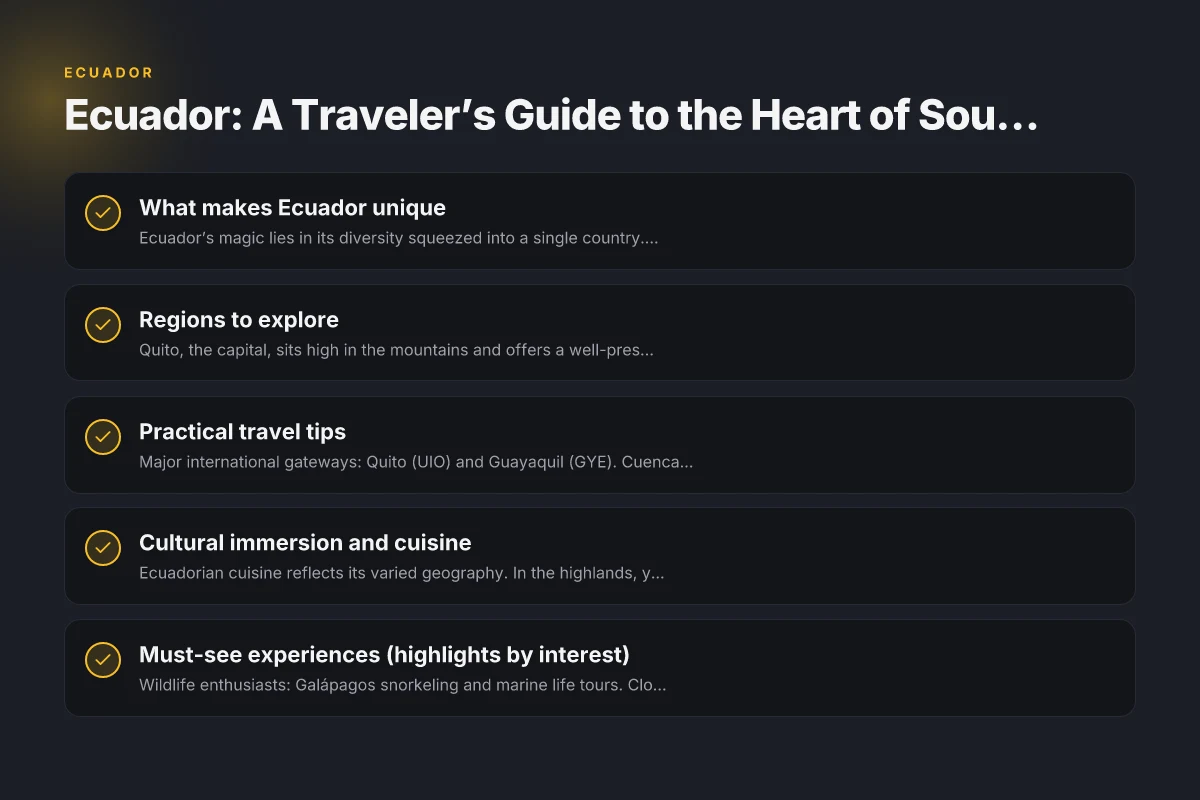
Ecuador’s magic lies in its diversity squeezed into a single country. You can stand on the equator, wander through cloud forests, explore volcanic landscapes, and stroll colonial towns, all in a few days of travel. The country’s compact size makes long-distance travel feasible, and its repute for safety, approachable cuisine, and English-friendly services helps first-time visitors feel at ease.
Key highlights include:
- The Galápagos Islands (special permit requirements and guided options)
- The Andes’ volcanoes and traditional highland culture
- Amazonian rainforest ecosystems and wildlife
- Coastal beaches with warm Pacific waters
- Historic cities like Quito and Cuenca with well-preserved architecture
Ecuador’s biodiversity is among the world’s richest per square kilometer, and conservation is an ongoing priority. Expect welcoming communities, flavorful street foods, and a strong sense of national pride in music, dance, and festivals.
Regions to explore
The Andean highlands
- Quito, the capital, sits high in the mountains and offers a well-preserved colonial core, the thrill of standing near the equator line, and vibrant markets.
- Cuenca is famous for its riverside setting, cobbled streets, and impeccable craftsmanship. The city’s churches and tapas-like cuisine reflect centuries of Spanish influence.
- Ambato and Loja provide a mix of agricultural landscapes and regional traditions, with opportunities for hiking and cultural immersion.
The Galápagos Islands
- A once-in-a-lifetime biosphere with unique species, where guided tours help you observe wildlife responsibly.
- Travel tip: book early, follow the rules to protect ecosystems, and consider a live-aboard or land-based itinerary to suit your pace.
- Activities include snorkeling with sea lions, observing giant tortoises, and sailing around volcanic islands.
The Amazon region
- Sucumbíos and Napo provinces offer river adventures, jungle lodges, and communities eager to share traditional knowledge about medicinal plants and wildlife.
- Expect hot, humid days, abundant birdlife, and jungle trails led by local guides.
The coast
- Coastal towns like Manta and Montañita offer surfing culture, seafood markets, and warm beaches.
- The Montañita area is known for nightlife, while Montañita’s quieter neighbors reveal pristine shores and turtle-nesting season experiences.
The extreme south and the heritage trail
- The páramo and highland plateaus around the southern highlands provide dramatic landscapes and opportunities for trekking near glaciers and high-altitude farms.
- Historic sites in southern towns highlight regional crafts, especially textile weaving and pottery.
Practical travel tips
Getting there and moving around
- Major international gateways: Quito (UIO) and Guayaquil (GYE). Cuenca is accessible by domestic flight or long bus rides.
- Domestic transport includes short flights, long-distance buses, and private shuttles. Buses are affordable and efficient for many routes, though travel time can be longer than expected due to terrain.
- If you plan to visit the Galápagos, expect higher costs and a strict entry process. Booking early and choosing a licensed operator is wise.
When to visit
- The dry season (June to September) offers clearer skies and good hiking conditions, especially in the Andes and cloud forests.
- The wet season (October to May) brings lush landscapes and vibrant biodiversity, with occasional heavy rain but fewer crowds.
- Shoulder months can provide a balance of decent weather and lower prices.
Safety and health
- Ecuador is generally safe for travelers, but standard precautions apply. Use hotel safes, avoid isolated areas at night, and watch your belongings in crowded markets.
- Altitude: Quito and some highland towns sit well above 2,500 meters. If you’re sensitive to altitude, acclimatize gradually, stay hydrated, and avoid heavy exertion on your first day.
- Vaccinations: check current health advisories. Typical recommendations include routine vaccines and, for the Amazon region, possible precautions against malaria or dengue. Consult a travel clinic for personalized guidance.
Money and costs
- The currency is the US dollar, which simplifies transactions for many travelers.
- Credit cards are widely accepted in cities, but small establishments and rural areas often prefer cash.
- Tipping is appreciated but not universally expected. A 5-10% tip in restaurants is common if service was good.
Language
- Spanish is the official language. In tourism hotspots, you’ll find English speakers, but learning a few basic Spanish phrases can enhance experiences and speed up interactions with locals.
Cultural immersion and cuisine
Ecuadorian cuisine reflects its varied geography. In the highlands, you’ll encounter hearty dishes like hornado (roast pork) and llapingachos (potato pancakes) served with tangy sauces and fresh cheeses. Coastal regions showcase seafood abundance: ceviche with lime, shrimp stews, and roasted fish with plantains. In the Amazon, you’ll discover river fish, yucca dishes, and panela-sweet flavors that highlight local ingredients. Exploring the Dominican Republic: A Complete Guide to the Caribbean Gem
Markets are a great way to taste and observe daily life. In cities such as Otavalo, the market scene is iconic, with textiles, crafts, and vibrant colors. Don’t miss traditional music and dance performances during festivals, which reveal the country’s robust sense of community.
For wildlife lovers, a few ethical guidelines matter. Respect distance when observing animals, avoid feeding wildlife, and stay on marked trails to protect habitats. Responsible ecotourism helps ensure the preservation of Ecuador’s remarkable biodiversity for future travelers.
Must-see experiences (highlights by interest)
- Wildlife enthusiasts: Galápagos snorkeling and marine life tours. Cloud forest birdwatching in Mindo.
- History and architecture lovers: Quito’s historic center (a UNESCO site) and Cuenca’s colonial architecture.
- Adventure travelers: Trekking around Quilotoa, a volcanic crater lake. Sandboarding or surfing on the coast. River excursions in the Amazon.
- Foodies: Market tastings, ceviche tastings, and traditional dishes in highland towns.
- Photographers: Sunrise over Cotopaxi National Park. The colorful markets of Otavalo. The dramatic coastline at sunset.
Practical planning checklist
- Confirm passport validity and visa requirements well in advance.
- Check Galápagos permits and booking requirements. Plan at least a few months ahead for peak seasons.
- Pack layers for variable climates: cooler highlands, tropical lowlands, and potential rain.
- Bring a universal adapter and a reliable power bank for long day trips.
- Book guided tours for Amazon and Galápagos experiences to ensure safety and educational value.
- Register with your embassy if the option is available. Note emergency numbers and local SIM card options for connectivity.
A quick comparison: regions at a glance
| Region | Highlights | Best for | Typical costs (per day) |
|---|---|---|---|
| Andes (Quito, Cuenca) | Colonial architecture, volcanoes, markets | Culture and climate, hiking | $60–120 |
| Galápagos | Wildlife, unique ecosystems | Nature, snorkeling, scientific interest | $350–800+ |
| Amazon | Rainforest, river-based activities | Wildlife watching, cultural experiences | $80–180 |
| Coast | Beaches, seafood, surfing | Beach holidays, water sports | $50–120 |
This table offers a sense of how experiences stack up across regions. Prices vary widely by season, accommodation type, and activity choice. Planning ahead helps you balance your interests with your budget.
Final recommendation
If you’re new to Ecuador, plan a balanced itinerary that blends culture, nature, and downtime. Start with Quito or Cuenca for a cultural base, spend a week in the Galápagos if you can, and sprinkle in a Jungle or Cloud Forest experience for biodiversity. Prioritize responsible travel, respect wildlife, support local communities, and choose licensed operators. With careful planning, Ecuador delivers a rich, varied, and deeply rewarding travel experience that feels expansive, even in a small country. Dominica: A Comprehensive Guide to the Nature Island
If you’d like, I can tailor an itinerary based on your interests, travel dates, and budget, including a day-by-day plan and links to vetted operators.
Henry runs the site's VPN trial and refund tests.