Greece: A Complete Guide to Its Islands, History, and Culture

A comprehensive overview of Greece's highlights, from ancient sites to Mediterranean islands and modern travel tips.
Greece sits at the crossroads of Europe and the Mediterranean, a country where ancient wonders, sun-drenched islands, and a lively modern culture come together. Whether you’re tracing the footsteps of philosophers in Athens, exploring the blue-and-white towns of the Cyclades, or sailing the emerald seas of the Ionian, Greece offers a timeless appeal. This guide covers the essentials, what to see, where to go, when to visit, and how to plan an unforgettable trip.

The essence of Greece: history, culture, and landscapes
Greece’s appeal rests on three pillars: ancient history, stunning geography, and a warm, welcoming culture.
- History: From the Acropolis in Athens to Delphi, Olympia, and Epidaurus, Greece is a living museum.
- Geography: A mainland bulging with rugged mountains, fertile plains, and a coastline dotted with thousands of islands.
- Modern culture: A rich culinary scene, lively nightlife in some towns, and traditional music and dancing in villages. Key tip: pacing matters. You can’t rush antiquity, but you can balance museum days with seaside downtime.
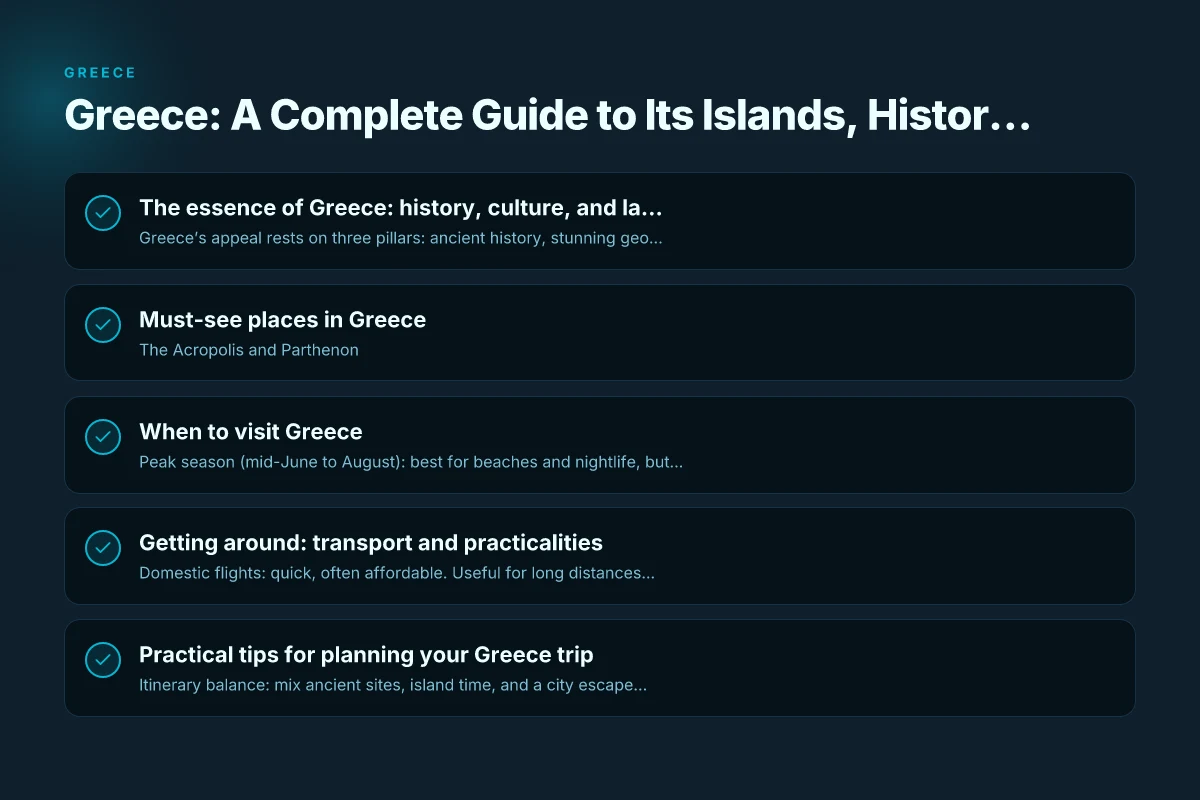
Must-see places in Greece
Athens: cradle of Western civilization
- The Acropolis and Parthenon
- Ancient Agora and Roman Agora
- The Acropolis Museum and the National Archaeological Museum
- Plaka neighborhood for streetside tavernas
The Cyclades: iconic white-washed beauty
- Santorini: caldera views, sunset in Oia, black sand beaches
- Mykonos: cosmopolitan energy and excellent beaches
- Naxos and Paros: a blend of beaches, villages, and ancient sites
The Peloponnese: diverse charms in close reach
- Ancient Olympia, Mycenae, Epidaurus
- Nafplio: charming seafront town and palatial architecture
- Mani and Monemvasi: rugged coastlines and medieval vibes
Crete: the largest island, big experiences
- Knossos and the Minoan heritage
- Elafonissi and Vai palm forest beaches
- Samaria Gorge for hikers, Lasithi Plateau for a quieter day
Ionian Islands: emerald seas and greener landscapes
- Corfu: Venetian architecture and lush hills
- Zakynthos: famous Shipwreck Beach and turquoise coves
- Kefalonia and Ithaca: dramatic landscapes and mythic associations
Other worthwhile stops
- Thessaloniki for food, festivals, and Byzantine churches
- Meteora for towering rock monasteries
- Mount Athos (for male visitors with permits and strict access)
When to visit Greece
- Peak season (mid-June to August): best for beaches and nightlife, but crowded and pricier.
- Shoulder seasons (May and September): ideal for good weather, fewer crowds, reasonable prices.
- Spring: wildflowers, pleasant hikes, and ancient sites without heat.
- Winter: travel to Athens and other cities is feasible, but some islands and beaches are off-season.
Travel tips by season:
- Book major ferries and domestic flights well in advance for summer travel.
- Pack sun protection, comfortable walking shoes, and light layers for evening dinners.
- Rent a car where helpful (Crete, Peloponnese) but rely on ferries and buses on many islands.
Getting around: transport and practicalities
- Domestic flights: quick, often affordable. Useful for long distances (Athens to Crete, Rhodes).
- Ferries: a scenic and economical way to hop between islands. Schedules vary by season.
- Buses: extensive coverage on the mainland. Reliable and budget-friendly.
- Taxis and rideshares: convenient within cities and at airports.
- Travel documents: valid passport, visa rules depending on your country, and health insurance.
Practical tips for planning your Greece trip
- Itinerary balance: mix ancient sites, island time, and a city escape to avoid fatigue.
- Budgeting: accommodation varies by island and season. Consider a mix of mid-range hotels and traditional guesthouses.
- Food: Greek cuisine is regional. Try fresh seafood in coastal towns, moussaka in mainland tavernas, and street food like souvlaki and gyros.
- Language: Greek is the official language; English is widely spoken in tourist areas.
- Etiquette: greet with a polite “Kalimera” (good morning) and be mindful of local customs in rural areas.
A simple comparison: islands vs. mainland experiences
| Experience type | Highlights | Pace | Best time to visit | Typical costs (rough) |
|---|---|---|---|---|
| Islands (Cyclades) | Iconic views, beaches, nightlife | Slower, scenic | May–June, Sept–Oct | Moderate to high in peak season |
| Islands (Ionian) | Green landscapes, calmer seas | Relaxed, family-friendly | May–June, Sept | Moderate, some premium spots |
| Mainland (Athens, Peloponnese) | History, museums, day trips | Varied; urban and rural mix | Year-round, especially spring | Generally more budget-friendly |
| Crete and large islands | Diverse landscapes, archaeology | Moderate to fast-paced | May–June, Sept–Oct | Wide range, from budget to luxury |
Where to stay: choosing accommodations
- Town centers: convenient for dining and nightlife, close to sites.
- Rural villages: quieter, authentic experiences, often more affordable.
- Family-run guesthouses: intimate service and local insights.
- Boutique hotels: blend of modern comfort with historic charm.
- Budget hostels and apartments: great for solo travelers or longer stays.
Final recommendations for a Greece trip
- Start with Athens for a couple of days to acclimate and see the essentials: Acropolis, Plaka, and a rooftop sunset view.
- Choose one or two islands that match your mood: Santorini for dramatic beauty, Crete for archaeology and diverse landscapes, or Naxos for a balance of beaches and culture.
- Include a mainland day trip from Athens to Delphi or Cape Sounion for panoramic ruins and sea views.
- Consider a multi-stop itinerary: Athens → island group (Cyclades or Ionian) → Crete or Thessaloniki for a city-farewell.
- Reserve time for slow days: a beach morning and a museum afternoon can prevent fatigue and make your trip feel relaxed.
Recommendation: If you want the quintessential Greece experience with a blend of iconic architecture, dramatic scenery, and excellent cuisine, start in Athens, spend a few days exploring its ancient sites, then island-hop to a pair of contrasting islands (one lively, one tranquil) to experience the spectrum of Greek island life. For first-timers, a 10-14 day itinerary that covers Athens, a Cyclades island group (like Santorini and Naxos), and Crete offers a balanced introduction to the country’s history, landscapes, and culture.
Naomi writes about VPN apps, browsers and privacy settings.