Hong Kong: a comprehensive guide to its culture, travel, and business hub
A thorough overview of Hong Kong’s culture, travel essentials, business landscape, and practical tips for visitors and professionals.
Hong Kong sits at the crossroads of Asia and offers a high-energy blend of tradition, skyline, and sea. From its iconic harbor views to bustling street markets, culinary genius to a transparent, pro-business environment, Hong Kong is a destination that rewards planning and curiosity. This guide covers culture, neighborhoods, travel tips, business climate, and practical recommendations to help you navigate the city with confidence.
Culture and identity in Hong Kong
A unique blend of influences
- History: A former British colony that returned to China in 1997, Hong Kong maintains a distinct legal, educational, and cultural framework.
- Language: Cantonese is the daily language; English remains widely used in business, law, and government.
- Traditions: Festivals like Lunar New Year, Mid-Autumn Festival, and traditional temple fairs sit alongside cosmopolitan art scenes.
Daily life and etiquette
- Respect for hierarchy and formality can be more pronounced in business settings, yet daily interactions are efficient and friendly.
- Public transit culture emphasizes punctuality and quiet behavior.
- Tap water is safe to drink in most urban areas, though many locals still prefer bottled water in hot weather.
Getting around Hong Kong
A compact city with stellar transit
- Mass transit: The MTR (Mass Transit Railway) is the backbone of travel, famed for reliability and coverage.
- Buses and trams: While slower, they offer scenic routes and lower costs.
- Ferries: Star ferries connect Kowloon and Hong Kong Island with iconic views of the harbor.
Neighborhoods to know
- Central and Sheung Wan: Finance, dining, nightlife, and historic architecture.
- Tsim Sha Tsui: Shopping, museums, and waterfront views.
- Causeway Bay: Shopping haven with high-energy streets.
- Mong Kok: Street markets, electronics, fashion, and street food.
- Sai Kung and Lamma Island: Outdoors, hiking, beaches, and seafood.
Practical travel tips
When to visit and what to see
- Best time: Late autumn (October–December) offers pleasant weather and clear skies. Spring can be humid but colorful with blossoms.
- Iconic sights: Victoria Peak, Star Ferry, Tian Tan Buddha (Big Buddha), Hong Kong Disneyland, Ocean Park, and the Big Waves at Repulse Bay.
Food and dining basics
- Dim sum culture: Breakfast or lunch at traditional teahouses is a must for many visitors.
- Night markets: Temple Street Night Market in Kowloon offers local snacks, souvenirs, and live performances.
- Dining etiquette: Tipping is not obligatory in Hong Kong. A service charge is sometimes included in the bill.
Budgeting and money
- Currency: Hong Kong dollar (HKD). Credit cards are widely accepted, but cash is handy for markets.
- Budgeting tips: Use Octopus cards for convenient transit and some retail purchases. Compare hotel, dining, and transport costs by neighborhood.
Business climate and economy
A hub for global trade and finance
- Strategic location: Proximity to Mainland China and Asia-Pacific markets makes it an ideal base for regional operations.
- Legal framework: The Basic Law and a stable, common-law-inspired system underpin contracts, disputes, and corporate governance.
- Talent pool: A bilingual workforce with strong capabilities in finance, technology, and professional services.
Doing business in Hong Kong
- Business structure: Common forms include limited liability companies, partnerships, and representational offices.
- Compliance: Understand tax obligations (no VAT, profits tax, salaries tax) and annual audit requirements.
- Networking: Industry associations, chambers of commerce, and official economic agencies facilitate connections.
A quick comparison: business environment in Hong Kong vs. Singapore
| Dimension | Hong Kong | Singapore |
|---|---|---|
| Legal system | Common-law heritage, strong protections | Common-law, highly transparent |
| Tax climate | Territorial tax system; profits tax capped competitively | Attractive tax regimes and incentives |
| Market access | Gateway to Mainland China; free port | Regional hub with easy access to SEA |
| Talent pool | Multilingual, finance-heavy | Diverse tech and services focus |
| Bureaucracy | Generally efficient; can be reactive | Highly streamlined and predictable |
Culture, arts, and recreation
Arts scene and heritage
- Museums: Hong Kong Museum of History, M+. The West Kowloon Cultural District hosts performances and exhibitions.
- Street art and galleries: Areas like Central and Sham Shui Po showcase contemporary art, street photography, and design boutiques.
- Festivals: Hong Kong Arts Festival, Chinese New Year fairs, and regional events reflect a vibrant calendar.
Nature and outdoor activities
- Hiking: Dragon’s Back, Tai Long Wan, and the Lantau Trail offer varied scenery.
- Villages and islands: Lamma Island for seafood and hiking; Tai O fishing village for traditional stilt houses.
- Beaches and water sports: Clearwater Bay and Stanley Main Beach provide a coastal escape.
Practical table: top tips for visitors and professionals
| Topic | Tip |
|---|---|
| Transit | Get an Octopus card for quick rides on MTR, buses, and ferries. |
| Connectivity | Consider a local SIM or eSIM for reliable data; public Wi-Fi is common but not universal. |
| Safety | Hong Kong is generally safe; stay aware in crowded areas and among nightlife districts. |
| Language | English is widely understood in business settings; learning a few Cantonese phrases helps. |
| Etiquette | Be punctual and discreet in business meetings; dress smartly in corporate environments. |
Final section: recommendations for Hong Kong visitors and professionals
If you’re visiting Hong Kong for the first time, map out a “harbor and heritage” itinerary: start with a ride on the Star Ferry at sunset, then explore Central’s blend of colonial-era architecture and modern towers. Add a day for the outlying islands or a coastline hike to balance the urban bustle. For food lovers, plan a dim sum morning followed by a crowded late-night stroll through Temple Street, sampling local street snacks along the way.
For business travelers, set up meetings with a realistic agenda and allow time for quick wrap-ups in between sessions. Use the MTR to move quickly and reliably between offices or client sites. Build a local network through chamber groups or industry associations and consider hiring a bilingual assistant or consultant to navigate regulatory nuances and local supplier landscapes.
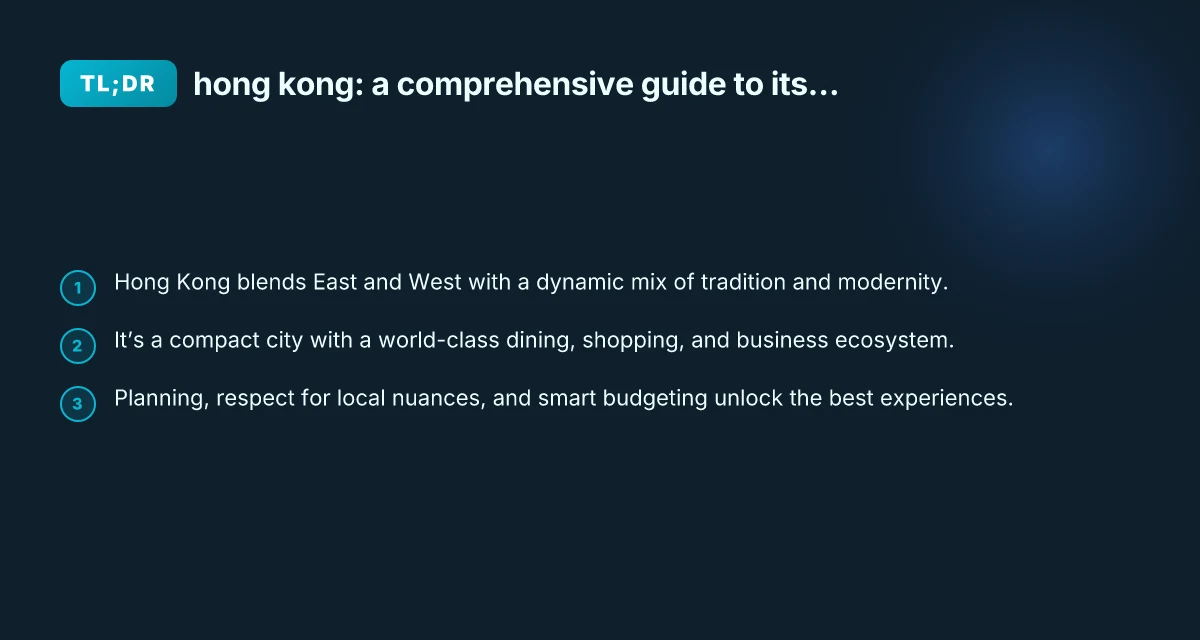
In summary, Hong Kong is a compact metropolis with a global heartbeat: a city where efficient infrastructure, a sophisticated service economy, and a rich tapestry of culture coexist. Its best-kept secret is not just the skyline, but the way you can blend planning with spontaneity, how you combine a curated itinerary with serendipitous discoveries in markets, galleries, and seaside villages. Whether you come for business or pleasure, Hong Kong rewards those who respect its pace, savor its flavors, and embrace its unique blend of tradition and modernity.
Henry runs the site's VPN trial and refund tests.