Thailand: a comprehensive guide to culture, travel, and essentials

An in-depth overview of Thailand’s culture, travel tips, must-see places, and practical advice for visitors.
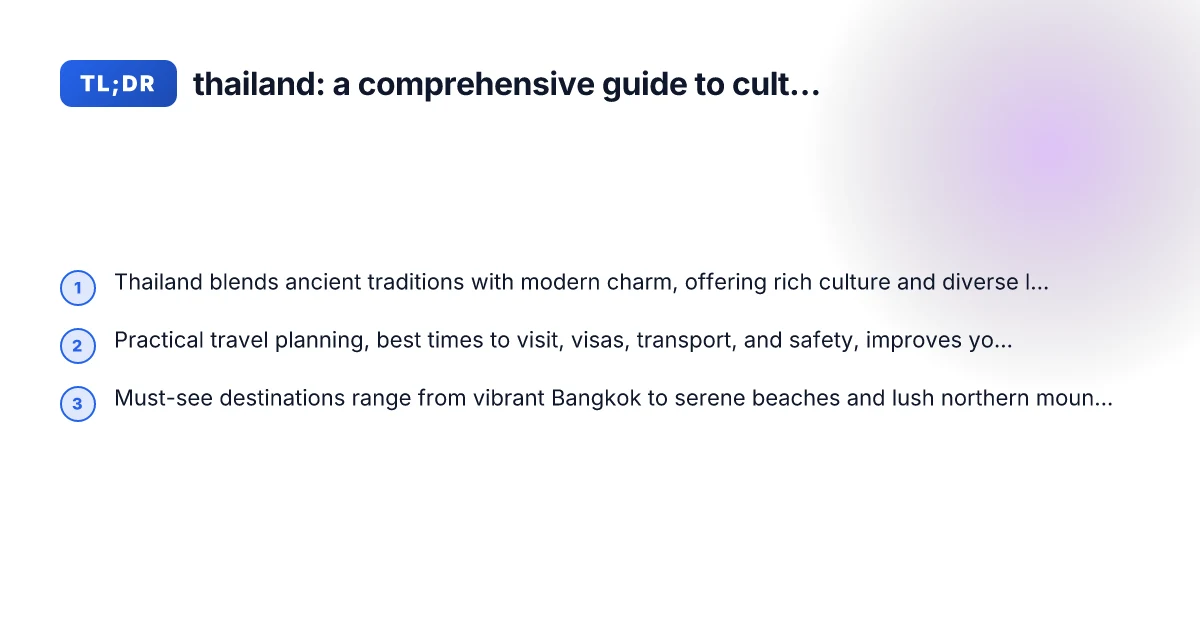
Thailand sits at the crossroads of Southeast Asia’s old kingdoms and today’s global travelers. Its capital, Bangkok, hums with street food, gilded temples, and modern skyscrapers, while the countryside offers tropical beaches, jungle treks, and mountain towns. Whether you’re drawn by ornate royal palaces, Buddhist rituals, or seaside relaxation, Thailand rewards curiosity with warm hospitality, delicious food, and a lively cultural scene.

A quick snapshot of what makes Thailand unique
Thailand’s appeal lies in tangible contrasts and everyday rituals that are easy to experience. You can ride a tuk-tuk through a neon-lit street market, then commune with monks at a quiet temple compound. Thai culture places strong emphasis on respect, community, and harmony, observable in the way people greet each other (the wai), in family-centered life, and in the country’s careful preservation of history and tradition. Food is a language of its own: fragrant curries, sour-sweet salads, and grilled seafood shared among friends. Nature runs the gamut from palm-fringed beaches to misty hill stations, offering a setting for almost any vacation style.
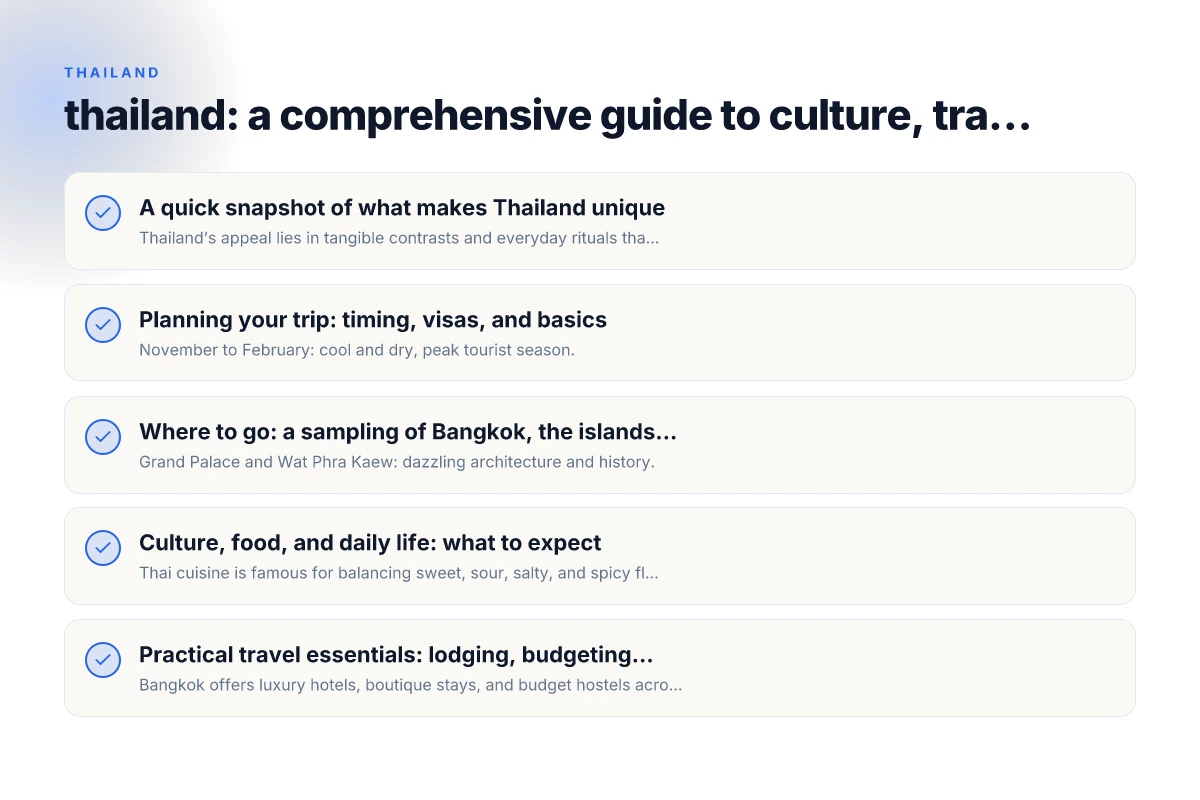
Planning your trip: timing, visas, and basics
Best time to visit
- November to February: cool and dry, peak tourist season.
- March to May: hot with occasional rain in some regions.
- June to October: the rainy season, lower prices, lush landscapes. Keep in mind that the north can be cooler at night, while the south stays warm year-round.
Visas and entry
- Many nationalities receive a visa exemption or visa on arrival for short stays. Long stays may require a visa in advance or a visa extension.
- Check the latest rules close to your travel date, as policies can change.
Getting around
- Domestic flights are efficient for long distances (Bangkok to Chiang Mai, Phuket, Krabi).
- Trains and buses connect most major cities. Night trains can save time and hotel costs.
- Local transport includes tuk-tuks, motorbike taxis, and ride-hailing apps, negotiate fares or use apps where available.
Safety basics
- Pickpockets and tourist scams exist in crowded areas. Stay aware in busy markets and on popular beaches.
- Respect temple etiquette: dress modestly, remove shoes, and speak softly in holy places.
- Health: drink bottled water where uncertain. Beware of heat exhaustion and sun exposure.
Where to go: a sampling of Bangkok, the islands, and the North
Bangkok: a modern metropolis with ancient roots
- Grand Palace and Wat Phra Kaew: dazzling architecture and history.
- Wat Arun and Wat Pho: iconic temples with impressive riverside views.
- Chatuchak Weekend Market: a sprawling market for clothing, crafts, and street food.
- Chinatown (Yaowarat): neon-lit streets and a treasure trove of Chinese-Thai cuisine.
- Modern shopping districts: Siam, Asiatique, and rooftop bars.
Islands and beaches: sun, sand, and sea
- Phuket and Krabi: dramatic limestone cliffs, long tail boats, and vibrant nightlife.
- Koh Phi Phi and Koh Lanta: snorkeling, diving, and quieter shores.
- Koh Samui and Koh Phangan: palm-fringed bays, luxury resorts, and monthly full moon parties (if you’re into that scene).
- Railay Beach: famed for rock climbing and a laid-back vibe, accessible by boat.
The North: cultural depth and cooler air
- Chiang Mai: ancient temples, cooking schools, and a gateway to elephant sanctuaries (ethically vetted).
- Chiang Rai: the White Temple (Wat Rong Khun) and nearby hill tribes.
- Pai and Mae Hong Son: backpacker-friendly towns with hot springs and scenic canyons.
- Sukhothai Historical Park: ruins from Thailand’s early capitals in a peaceful setting.
Culture, food, and daily life: what to expect
Food: a central pillar of Thai life
Thai cuisine is famous for balancing sweet, sour, salty, and spicy flavors. In street markets, you can sample:
- Pad Thai: stir-fried noodles with eggs, tofu, shrimp, or chicken.
- Som Tum: green papaya salad with lime, chili, and peanuts.
- Tom Yum: hot and sour soup with lemongrass and kaffir lime leaves.
- Massaman and green curry varieties: rich and aromatic with coconut milk. Tips:
- Eat with a fork and spoon. Use the spoon to push food onto the fork.
- Try dishes at small, busy stalls where locals eat.
- Hydrate, but be mindful of spice levels. You can adjust heat with chilies or sauces.
Religion and etiquette
- The majority of Thais practice Buddhism. Temples are common, and visiting is a learning experience.
- Dress modestly when visiting religious sites. Shoulders and knees should be covered.
- The wai is a respectful greeting: hands pressed together at chest level with a slight bow. Return the wai politely.
Arts, music, and festivals
- Thai classical dance and theater (Khon) reflect mythic stories and royal history.
- Muay Thai is not just a sport but a cultural exhibition with choreographed precision.
- Major festivals include Songkran (Thai New Year water festival) and Loy Krathong (floating lanterns). Participating respectfully can be a highlight, but observe local customs and safety guidelines.
Practical travel essentials: lodging, budgeting, and tips
Where to stay
- Bangkok offers luxury hotels, boutique stays, and budget hostels across neighborhoods like Silom, Siam, and the Old City.
- Coastal towns range from upscale beach resorts to homestays that provide a more intimate look at local life.
- In the north, you’ll find guesthouses and small hotels in historic towns and nature-rich areas.
Budgeting basics
- Food: street meals are typically inexpensive. Mid-range meals vary by location.
- Transport: domestic flights can be a good value for long hops. Trains and buses are economical for shorter legs.
- Activities: temple visits may have small entry fees. Guided tours can add to costs but save time and provide context.
Staying healthy and respectful
- Hydration is essential in the tropical climate. Carry water and wear sunscreen.
- Use reputable tour operators, especially for animal sanctuaries or adventure activities.
- Respect local customs and wildlife. Avoid presentations that exploit animals or disrupt ecosystems.
A simple comparison: what to prioritize on your itinerary
Table: experiences by travel style
| Travel style | Highlights | Typical pace | Best region(s) to start |
|---|---|---|---|
| Culture and history | Grand Palace, ancient ruins, Buddhist temples | Moderate | Bangkok, Sukhothai, Chiang Mai |
| Beach and islands | Clear waters, snorkeling, sunset dinners | Flexible | Phuket, Krabi, Koh Samui |
| Nature and hiking | Mountains, waterfalls, hillside villages | Active | Chiang Mai, Chiang Rai, Pai |
| Food-focused | Street food tours, markets, cooking classes | Social, flexible | Bangkok, Chiang Mai, Phuket |
Practical itineraries to consider
- Two-week classic loop: Bangkok (3–4 days) → Ayutthaya (1 day) → Chiang Mai (3–4 days) → Chiang Rai or Pai (2–3 days) → Phuket or Krabi (3–4 days).
- Beach-focused week: Bangkok layover (2 days) → fly to Phuket or Krabi (5 days) → island hopping with day trips to Phi Phi or Phang Nga.
- Slow travel in the north: Chiang Mai (5–6 days) with a side trip to Pai. Two weeks including nearby hill tribe villages and a day at an ethical elephant sanctuary.
The recommendation: how to plan for a memorable Thai trip
If you’re seeking a balanced, all-around experience, start in Bangkok to acclimate to the pace and cuisine, then move to the north to enjoy cooler air and a slower rhythm. Finish with a few days on the coast or islands to unwind by the sea. Prioritize experiences that support sustainable tourism, such as visiting community-based projects, choosing ethical wildlife encounters, and supporting local businesses through meals, markets, and crafts. Tanzania travel and culture: a comprehensive guide to the heart of East Africa
- Build a loose structure: identify three to four must-see experiences and leave room for spontaneous discoveries.
- Embrace local food as a guide: let street food stalls lead you to neighborhoods and hidden gems.
- Respect etiquette and safety: modest dress for temples, careful handling of money and valuables, and safe transport choices.
Thailand invites travelers to savor both its ornate temples and its simple, friendly charisma. With careful planning, you can enjoy a trip that feels abundant in culture, flavor, and scenery without sacrificing comfort. Whether you’re chasing city buzz, mountain air, or a sun-soaked coastline, Thailand offers a rich, accessible entry into Southeast Asian life.
Naomi writes about VPN apps, browsers and privacy settings.